
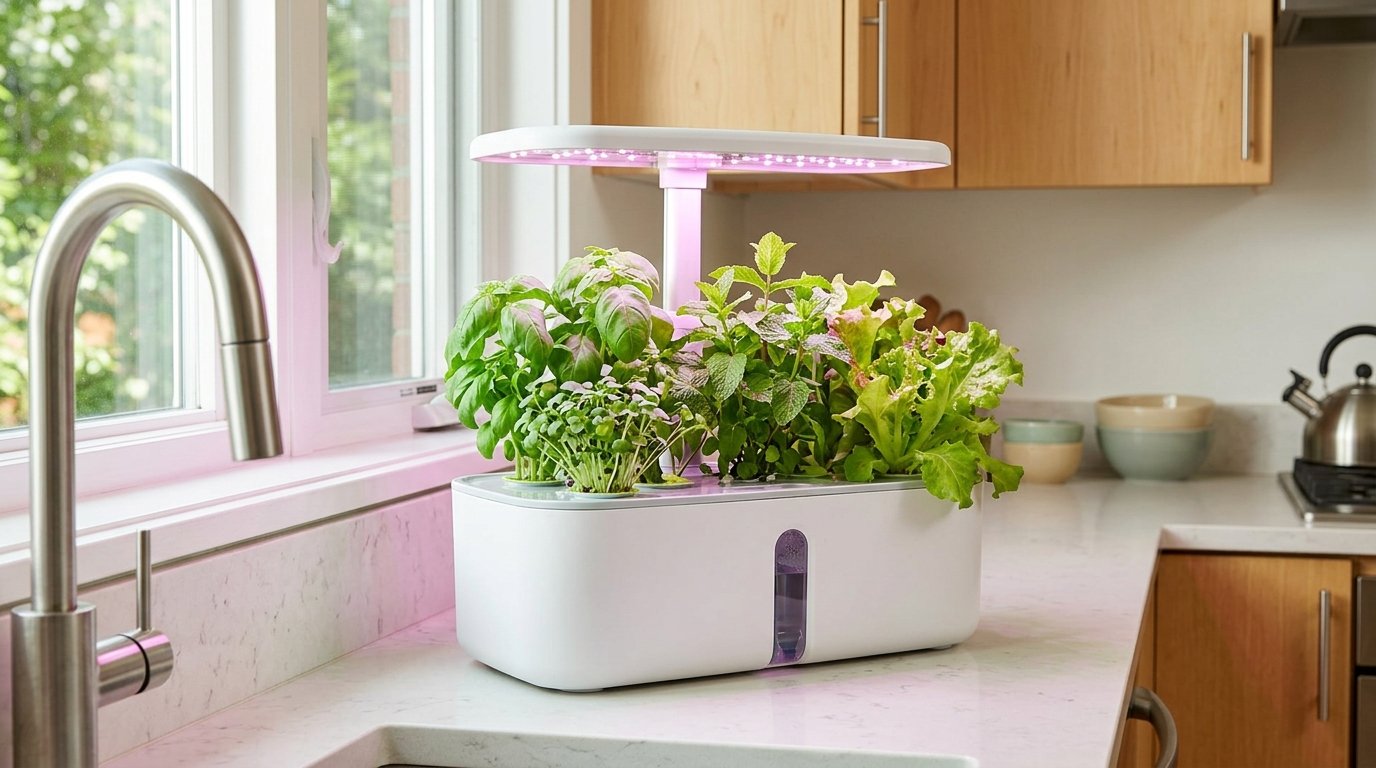
Want to grow lettuce or basil indoors but don’t have room for a backyard garden?
A good hydroponic system can fit on a kitchen counter and remove much of the guesswork.
The trick is choosing a system that’s easy to assemble, simple to maintain, and inexpensive enough that your first experiment doesn’t feel like a major investment.
And you don’t need to spend $200 or $300 to get started.
There are several beginner-friendly hydroponic systems available for less than $100, including compact countertop gardens, simple Deep Water Culture setups, and even DIY options that cost less than a restaurant dinner.
We compared the easiest options based on setup, growing capacity, lighting, maintenance, and overall value.
Here are the best hydroponic systems for beginners under $100.
Quick Comparison Table
| System | Best For | Approx. Budget | Difficulty |
|---|---|---|---|
| AeroGarden Harvest 2.0 | Best Overall | ~$90–$100 | Very Easy |
| iDOO 12-Pod Hydroponics Growing System | Best for Herbs & Greens | ~$70–$90 | Easy |
| LetPot LPH-Air | Best for Small Apartments | ~$65–$80 | Easy |
| VIVOSUN 5-Gallon DWC | Best for Learning Hydroponics | ~$70–$90 | Moderate |
| Kratky DIY System | Best Budget | ~$20–$40 | Moderate |
Prices can change. Always check the current price before buying.
#1 – Best Overall: AeroGarden Harvest 2.0
If you want the easiest possible introduction to indoor hydroponics, the AeroGarden Harvest 2.0 is one of the first systems we’d look at.
The Harvest 2.0 is designed for countertop growing and can hold up to six plants.
It includes a 15W full-spectrum LED grow light and an adjustable growing area that provides up to 12 inches of plant height. The compact design is only about 10.5 inches wide and 4.75 inches deep, making it surprisingly easy to fit into a kitchen or apartment.
The current listed price from AeroGarden is $99.95, putting it right at the top of our $100 budget.
Why We Like It
The biggest advantage is simplicity.
You don’t have to build a reservoir from scratch.
You don’t have to install an air pump.
You don’t have to figure out how to mount a separate grow light.
The system comes with the garden, LED light, and power adapter.
The grow light also has an automatic timer, so you don’t have to remember to turn it on every morning and off every night.
That makes a big difference for beginners.
Pros
- Compact countertop design.
- Holds up to six plants.
- 15W full-spectrum LED grow light.
- Automatic light cycle.
- Adjustable light height.
- Easy setup.
- Designed specifically for indoor growing.
Cons
- $99.95 leaves almost no room in the initial $100 budget for extras.
- Replacement seed pods can add ongoing costs.
- Limited vertical growing space compared with larger systems.
- Not ideal for large plants.
Best For
Someone who wants an easy first hydroponic garden without building anything.
Avoid If
You want to grow large tomatoes, peppers, or several large plants at once.
#2 – Best for Herbs and Greens: iDOO 12-Pod Hydroponics Growing System
If your priority is getting as many herbs and leafy greens as possible from a relatively small countertop system, the iDOO 12-Pod Hydroponics Growing System is worth considering.
This type of system gives you significantly more planting capacity than a three- or six-pod countertop garden.
Current listings put similar iDOO 12-pod systems around the $70–$90 range, although the exact price varies by configuration and seller. A recent under-$100 comparison listed the 12-pod version at around $79.98.
The larger growing area makes it particularly useful if you want basil, parsley, cilantro, lettuce, and other compact plants growing at the same time.
Why We Like It
Twelve growing spaces give you room to experiment.
You can grow several herbs while still keeping a few spaces available for something new.
That’s important because beginners tend to discover a dangerous hobby:
“I’ll just try one more plant.”
Suddenly, the kitchen looks like a small research facility.
Pros
- Up to 12 growing spaces.
- Full-spectrum LED lighting.
- Good capacity for herbs and leafy greens.
- Compact enough for indoor use.
- More room for experimentation than smaller systems.
- Good value when discounted.
Cons
- More plants mean more maintenance.
- Larger reservoirs can take longer to clean.
- Some versions may not include seeds.
- Product configurations can vary between sellers.
Best For
Beginners who want to grow several herbs or greens instead of just two or three plants.
Avoid If
You want the absolute simplest possible system and don’t need more than a few plants.
#3 – Best for Small Apartments: LetPot LPH-Air
Small apartment?
Limited counter space?
Want something that looks more like a modern appliance than a DIY science project?
The LetPot LPH-Air is an interesting option.
LetPot currently lists the LPH-Air at around $69.99 on its website, depending on configuration. The system combines a compact indoor garden with LED lighting and smart features.
Recent Amazon-linked listings also show the LPH-Air around the same price range.
One of the main attractions is its combination of automation and relatively small footprint.
You can use the system for herbs, leafy greens, and other compact plants without needing a separate grow light.
Why We Like It
The LPH-Air is aimed at people who want convenience.
It combines the growing container, lighting, and automated features in one unit.
That’s useful if you live in an apartment and don’t want to spend your weekend assembling tubes, pumps, and reservoirs.
Pros
- Compact indoor design.
- Adjustable LED grow light.
- Automated watering features.
- Smart/app functionality on supported configurations.
- Good option for herbs and leafy greens.
- Attractive for modern kitchens and apartments.
Cons
- App features may be unnecessary for beginners.
- More electronics can mean more things to troubleshoot.
- Plant capacity is still limited compared with larger systems.
- Price varies depending on configuration.
Best For
Apartment dwellers who want a compact and modern indoor garden.
Avoid If
You prefer a completely passive system with no electronics.
#4 – Best for Learning Hydroponics: VIVOSUN 5-Gallon DWC System
If your goal isn’t just growing plants but actually learning how hydroponics works, a small VIVOSUN 5-Gallon DWC Hydroponic System is a different kind of choice.
DWC stands for Deep Water Culture.
Instead of using a countertop appliance that does most of the work for you, DWC lets you see the basic hydroponic process more directly.
The VIVOSUN one-bucket kit is currently listed by the manufacturer at $69.99 and includes a 5-gallon bucket, net basket, air pump, air stone, tubing, clay pebbles, water-level indicator, and related components.
That’s a lot of equipment for the price.
Why We Like It
You learn what is actually happening inside a hydroponic system.
The roots grow into the nutrient solution.
The air pump adds oxygen.
The plant receives nutrients through the water.
You can monitor the system yourself instead of relying entirely on automated reminders.
It’s a great educational setup.
Pros
- Affordable entry into DWC.
- Includes an air pump and air stone.
- Large 5-gallon reservoir.
- Suitable for larger plants than many countertop systems.
- Good way to learn hydroponic fundamentals.
- Easy to expand later.
Cons
- Takes more space.
- Requires more monitoring.
- No built-in grow light.
- Requires more knowledge than a countertop system.
- Not as attractive as a kitchen-focused indoor garden.
Best For
Beginners who want to understand hydroponics rather than simply press a button and watch plants grow.
Avoid If
You want a completely automated countertop garden.
#5 – Best Budget Option: Kratky DIY
If you want to spend as little as possible, forget the fancy equipment.
The Kratky method is one of the cheapest ways to experiment with hydroponics.
You can build a basic system using a container, net pot, growing medium, nutrient solution, and plant.
There is no water pump.
There is no air pump.
There is no complicated plumbing.
That’s why the Kratky method is so popular with beginners.
Why We Like It
It removes almost everything unnecessary.
You can build a simple setup for roughly $20–$40 depending on what you already have.
The method works particularly well for leafy greens and herbs.
It also teaches you an important hydroponic principle:
Plants don’t need soil.
They need access to water, nutrients, oxygen, and light.
Pros
- Extremely inexpensive.
- No pump required.
- Very few components.
- Easy to understand.
- Excellent learning project.
- Great for lettuce and herbs.
Cons
- Less automated.
- You need to monitor the water.
- Not ideal for every type of plant.
- DIY containers may not look as polished.
- You’ll need to provide suitable lighting indoors.
Best For
Budget-conscious beginners who don’t mind doing a little work themselves.
Avoid If
You want a polished countertop system that looks ready to use straight out of the box.
Which Hydroponic System Should You Buy?
There isn’t one perfect system for everyone.
The best choice depends on what you want from your first garden.
If you want the easiest possible experience, choose the AeroGarden Harvest 2.0.
It combines a compact growing area, built-in LED lighting, and simple controls in one package.
If you want more room for herbs and leafy greens, the iDOO 12-Pod gives you more planting capacity.
If you’re short on space and like smart features, the LetPot LPH-Air is worth considering.
If you want to actually learn hydroponics, the VIVOSUN DWC is the more educational option.
And if your budget is the main concern, start with Kratky.
You can always upgrade later.
What About Click & Grow?
You may have seen the Click & Grow Smart Garden 3 recommended in other beginner gardening guides.
It is an excellent compact indoor garden.
The problem?
It currently doesn’t fit this article’s $100 limit in the U.S.
Click & Grow currently lists the Smart Garden 3 at $124.95. It holds three plant pods, uses an 8W LED system, and has a 1.5-liter water tank.
So we’re not going to pretend it’s an under-$100 option just because it would make our list look nicer.
If you find it discounted below $100, it becomes much more interesting.
Are Cheap Hydroponic Systems Worth It?
Yes, if you understand what you’re buying.
A $70 hydroponic system isn’t going to give you the same capacity as a $300 indoor garden.
But it doesn’t need to.
The purpose of a beginner system is to get you growing without spending a fortune.
A cheap system can be an excellent way to discover whether you actually enjoy hydroponic gardening.
If you love it, you can upgrade later.
That’s much smarter than spending $500 before you’ve grown your first basil plant.
How Long Do These Systems Last?
It depends on the system and how well you maintain it.
Simple plastic containers can last for years.
Pumps and other electronic components eventually wear out.
For example, Click & Grow says its gardens are designed for long-term use and that the grow light has a minimum lifespan of seven years.
For other systems, longevity depends heavily on the quality of the components and how frequently you clean and maintain them.
Keeping the reservoir clean, preventing mineral buildup, and replacing worn parts can extend the life of your setup.
Do I Need to Buy Extra Seeds or Nutrients?
Sometimes.
This depends on what’s included with the system you purchase.
Some countertop gardens include seed pods.
Others include only the garden and lighting system.
For example, the current AeroGarden Harvest 2.0 product listing specifies the garden, detachable 15W grow light, and power adapter in the box, while seed-pod configurations can vary.
Always check the exact package contents before buying.
You may also need hydroponic nutrients, especially if you’re using your own seeds.
This is one reason the cheapest-looking system isn’t always the cheapest system to start growing with.
Do I Need a Grow Light?
If you’re growing indoors, probably.
A bright window can help, but indoor sunlight isn’t always enough for healthy growth.
Most countertop hydroponic gardens solve this problem by including LED grow lights.
The AeroGarden Harvest 2.0, for example, includes a 15W full-spectrum LED grow light with an automatic timer.
DIY systems such as Kratky may require you to purchase a separate light.
Remember to include that cost in your real budget.
Are Hydroponic Systems Hard to Maintain?
Not necessarily.
The easiest countertop systems are designed to reduce maintenance.
You may need to:
- Add water.
- Add nutrients.
- Check plant growth.
- Clean the system.
- Monitor the roots.
- Replace plants after harvesting.
More advanced systems require more attention.
DWC systems, for example, involve managing an air pump, nutrient solution, water level, and other variables.
The good news is that you don’t have to start there.
Choose a system that matches your current skill level.
What Can You Grow in a $100 Hydroponic System?
The best choices are usually compact plants.
Try:
- Basil.
- Lettuce.
- Mint.
- Parsley.
- Cilantro.
- Chives.
- Arugula.
- Kale.
- Spinach.
Some systems can also support tomatoes, peppers, and strawberries.
However, larger plants need more space, light, and support.
If you’re starting with a small countertop system, herbs and leafy greens are usually the safest bet.
Final Verdict
You don’t need to spend hundreds of dollars to start growing hydroponically.
For most beginners, the AeroGarden Harvest 2.0 is our top pick when simplicity matters most. It combines a compact six-pod design with a built-in 15W LED grow light and simple controls.
If you want more growing capacity, look at an iDOO 12-Pod system.
For small apartments, the LetPot LPH-Air offers a compact approach with smart features.
If you want to learn the fundamentals, the VIVOSUN DWC is a better educational choice.
And if you’re on a tight budget, Kratky is incredibly cheap to try.
The important thing is not buying the most expensive system.
It’s actually starting.
Pick a few easy plants.
Give them enough light.
Follow the nutrient instructions.
Keep the water clean.
And learn as you go.
Your first hydroponic garden doesn’t need to be perfect.
It just needs to grow.
Editor’s note: Prices and availability can change frequently. Check the current Amazon listing before purchasing.